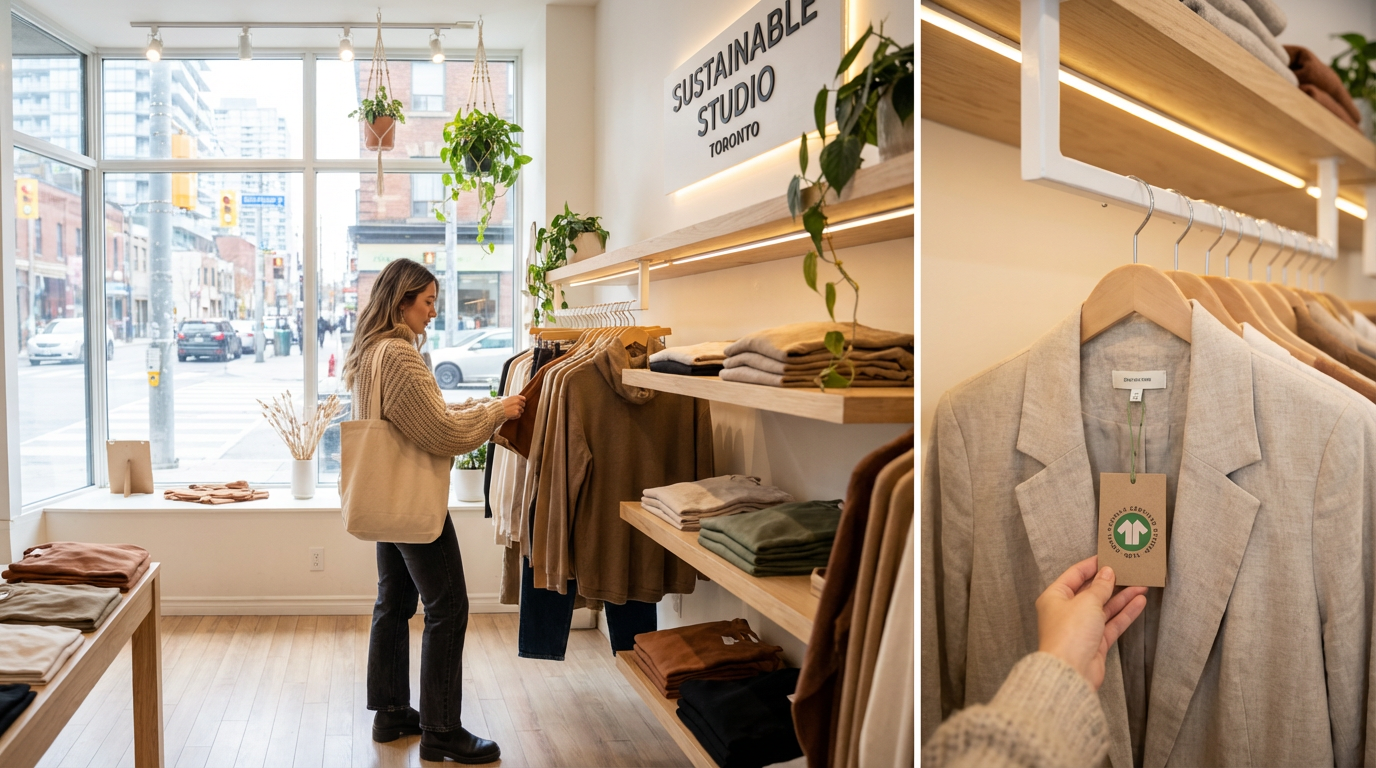
Not long ago, buying sustainable fashion in Canada meant accepting a trade-off: pay significantly more, own significantly fewer options, and resign yourself to the aesthetic limitations of brands more focused on supply chain ethics than design. That calculus has changed. The Canadian sustainable fashion sector has reached a maturation point where it is competing on all three dimensions — price, selection, and style — and winning a growing share of consumers who would previously have defaulted to fast fashion.
The transformation has been driven by a combination of factors: improved manufacturing efficiencies, the maturing of certified organic and recycled material supply chains, a cohort of Canadian designers who trained in sustainability from the ground up rather than retrofitting it onto existing practices, and — perhaps most significantly — a generational shift in purchasing behaviour among Canadians under 40.
Canadian Brands Leading the Shift
The country's most visible sustainable fashion success stories span a range of categories. In outerwear, a sector where Canada has natural authority, brands like Norden and Hinterland have built followings that rival international players, with down-alternative and recycled-shell products that perform in genuinely Canadian conditions — not just in the mild weather for which many "outdoor" brands are actually designed.
In everyday wear, the market has seen an influx of brands built on natural-fibre basics — linen, organic cotton, Tencel — that have convinced consumers who once dismissed sustainable fashion as frumpy that low-impact clothing can be exactly what they want to wear. "We stopped asking customers to make a sacrifice," explained the founder of one such Calgary-based label. "The clothes have to be better, not just more ethical. If we get that right, the ethics are a bonus that seals the deal."
The Certification Landscape
Consumer interest in sustainable fashion has also driven demand for greater transparency, which in turn has pushed brands toward third-party certification. The B Corp certification, GOTS (Global Organic Textile Standard) certification, and Fair Trade labelling have all seen increased uptake among Canadian fashion brands, providing consumers with independently verified claims rather than self-asserted ones.
Greenwashing remains a concern — the Competition Bureau of Canada updated its guidelines on environmental marketing claims in 2024, and several brands have faced scrutiny for sustainability assertions that outran their supply chain reality. But the overall trend is toward greater rigour, driven partly by regulation and partly by a consumer base that has become genuinely sophisticated in its scepticism of vague green claims.
"Our customers read the certification labels. They ask questions in our comments sections that would have come from industry insiders five years ago. The knowledge is there. You can't fake it anymore." — Founder, Canadian sustainable fashion label
Resale and Rental: The New Sustainable Infrastructure
Alongside the growth of sustainable new fashion has come a parallel expansion in the resale and rental sectors. Canadian platforms — both national and regional — have built substantial user bases among Canadians who want to reduce the environmental footprint of their wardrobe without abandoning the pleasure of variety. The luxury resale market, in particular, has expanded dramatically, with authentication services making high-end secondhand purchases practical for buyers who previously worried about counterfeits.
The cumulative effect of these trends — more sustainable new product, better resale infrastructure, growing consumer literacy, improving brand transparency — is a fashion market that looks meaningfully different from the one that existed five years ago. The sustainable option is no longer the exception. For a growing number of Canadian shoppers, it is simply the default.